
Journal · Point of view
Why Women Are Choosing Limited Edition Handbags Over Designer Labels
25 March 2026
The Shift No One Is Talking About
Something has changed in the way discerning, affluent women buy luxury. Quietly, almost imperceptibly, a new kind of collector has emerged, one who no longer measures value by the size of a logo or the length of a waiting list. She is choosing differently. Not less. Differently.
Across Europe and the Middle East, a growing number of high-end consumers are stepping away from the established designer machine in favour of limited edition handbags that offer something the monogrammed giants cannot: rarity that is real, not manufactured. Originality that cannot be mass-produced. And a relationship with an object that goes deeper than recognition.
This is not anti-luxury. It is a more evolved understanding of what luxury actually means.
What the Designer Label Once Promised
For decades, the appeal of a recognisable designer label was clear: status, craftsmanship, and the implicit endorsement of an institution. To carry a bag from one of the great houses was to signal that you understood quality, and that you could afford it.
But something has shifted. Flagship styles are reproduced in enormous quantities. The same silhouettes appear across every major city, every rooftop bar, every airport lounge. The bag that was once an expression of individuality has, for many women, become a uniform.
When everyone carries the same bag, the bag stops speaking for you.
This is not a fringe opinion. It is a sentiment that is increasingly voiced among women who have the means to buy anything they want, and are choosing to buy differently.
The Rise of the Informed Buyer
The luxury consumer of 2025 and 2026 is not the same buyer she was ten years ago. She researches. She understands the difference between genuine Italian leather and coated canvas. She knows which hardware finishes will last and which will tarnish. She has read enough about supply chain realities to approach brand narratives with a healthy scepticism.
This shift in knowledge has had a profound effect on purchasing behaviour. When a buyer understands what goes into making a genuinely well-constructed leather bag, she stops paying a premium purely for a name. She starts asking different questions: Who made this? From what? In what quantity? Will it last?
These are the questions that independent luxury brands producing limited edition handbags are built to answer, honestly, and in full.
True Exclusivity vs. Manufactured Scarcity
It is worth being precise about what limited edition actually means, because the term has been borrowed and diluted across the market.
Some brands announce limited editions that run to thousands of units. Others create artificial waiting lists to simulate demand that does not naturally exist. These are marketing mechanics, and experienced buyers recognise them quickly.
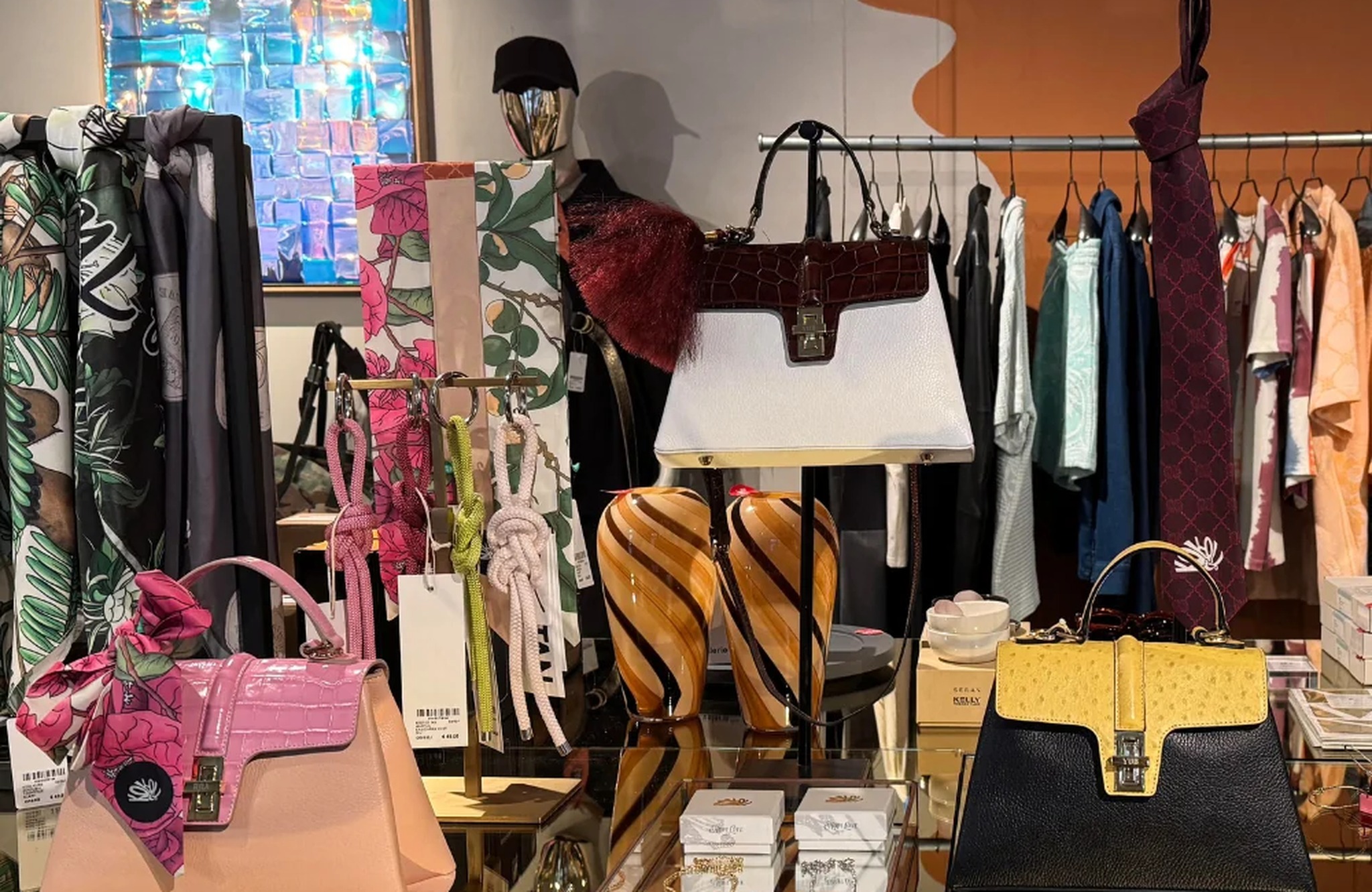
A genuine limited edition is constrained by the nature of its production. When a piece is made by hand, in small numbers, from materials sourced with intention, the scarcity is not a story, it is simply a fact. There are fifteen bags because that is how many could be made well. When they are gone, the design does not return in the same color the following season.
For the woman who understands this distinction, a genuinely limited edition piece carries a different kind of value. She is not buying access to a queue. She is owning something that, by its nature, very few other people will ever hold.
Italian Leather and the Question of Craft
One of the reasons limited edition handbags from independent ateliers command such loyalty among knowledgeable buyers is the question of material and craft. The great designer houses work at a volume that demands supply chains of significant complexity. Quality control, by necessity, becomes a system rather than a standard.
Smaller ateliers working at limited scale have the freedom to source and produce differently. Italian leather, when genuinely sourced from established tanneries, represents a standard of hide preparation, dyeing, and finish that is difficult to replicate anywhere else in the world. The leather breathes. It ages with character. It develops a patina that lower-grade materials never achieve.
Beyond material, craft at this scale means that every decision about construction is made with full awareness that there are no large volumes to absorb inconsistency. The evenness of a seam, the weight of the hardware, the way a closure sits, these details are not checked against a specification sheet. They are felt, adjusted, and refined by hand.
For a woman buying a bag she intends to carry for fifteen years, this distinction matters enormously.
The Psychology of Buying Outside the Designer Hierarchy
There is a particular kind of confidence required to step outside the established luxury framework. For many women, the designer label has long functioned as a social shorthand, a way of communicating taste and purchasing power simultaneously, without needing to say a word.
But a growing number of affluent buyers have moved past this. They are not interested in communicating to a room. They are interested in owning something that satisfies them privately, something whose value they understand completely, regardless of whether anyone else in the room recognises the name.
This is a more mature relationship with luxury. It requires knowing enough about leather, construction, and design to evaluate a piece on its own terms. Women who buy this way tend to buy less, keep longer, and develop a far more personal connection with the objects they choose.
Independent luxury brands producing limited edition handbags are, increasingly, the destination for this kind of buyer. Not because they are a compromise, they are not. But because they offer something the heritage houses have largely stopped providing: genuine individuality, made with full attention, in a quantity that makes it truly yours.
Choosing Differently Is Still Choosing Well
The woman choosing a limited edition bag from an independent atelier is not settling. She is exercising a more sophisticated form of taste, one that values originality over recognition, intention over volume, and longevity over trend cycles. She has done the research. She knows what she is holding.
Luxury has always been, at its core, about access to the exceptional. For a long time, the exceptional was defined by institutions. Increasingly, it is being redefined by the women who carry the work, and by the designers willing to make things properly, in numbers that mean something.
If you have been considering something beyond the obvious, something made with genuine care and intention, in a quantity that makes it genuinely rare, you are not alone. A quiet movement has already begun.
Explore the current collection at Your Uncommon Brand, and find the piece that was made, in limited numbers, for someone exactly like you.